
Bohemian modernist flat downtown

Zografou, Greece
Laid-back, colorful, modernist 60 sq.m. flat downtown. Feels as if you're staying at an absent friend's place. A variety of day- and night-life options accessible even on foot. Easy to commute, dir...
Showing posts with label Reviews. Show all posts

Tuesday, 12 February 2013

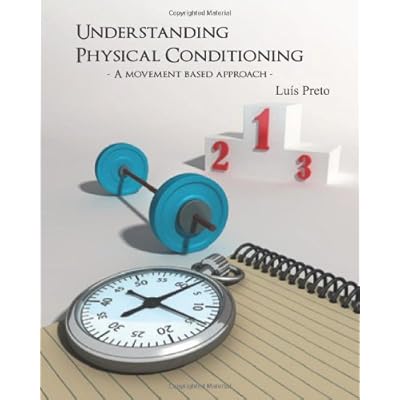
Book Review: Understanding Physical Consitioning - A Movement Based Approach, by Luis Preto

This is the second book by Luis Preto I will be reviewing for the Dynamo blog and, let me tell you here that reading Luis' books is always a treat for me! I was quite impressed by his How to Sequence the Teaching of Technique and Tactics, a book about how to construct a sound curriculum for any martial art, and I am just as impressed (if not more) by his new book on physical conditioning for athletes, which is aptly titled Understanding Physical Conditioning - A Movement Based Approach.

OH MAN, ANOTHER BOOK ON PHYSICAL CONDITIONING... DO WE REALLY NEED IT?
Well, yes. I happen to own a great number of books on physical conditioning for sports and I have found most of them either too simplistic (little more than exercise prescriptions) or way too wordy, full of jargon and somewhat complex to actually apply in the gym. According to most of these books, an athlete needs to do resistance training in order to a) strengthen connective tissues, then b) increase muscle mass, then c) increase maximum strength, then d) increase explosive strength and finally e) convert to strength endurance, while simultaneously training to improve the body's ability to supply energy for repeating the activities her sport demands. Now add to these some range of motion training, plus some more training to prevent injuries and you are left with an algorithm of so many variables, that one inevitably has to wonder whether conditioning for athletes is actually way more complex that rocket science and quantum physics put together. Plus, if an athlete has to do so much conditioning work, is there any time in her life to practice technique and really participate in her chosen sport?

IS THIS BOOK ANY DIFFERENT THEN?
Oh, you bet! Preto starts the book by arguing that the common systematization of physical conditioning into the categories of strength, flexibility, speed and endurance is wrong, plus the all too common approach that has these physical abilities developed separately, in distinct training stages is short-sighted (yes, he actually uses this word). This way, the process of physical preparation for an athlete becomes necessarily complex and hard to manage. The argument is a very sound one, if you think about it: your skeletal muscles contract only in one way and depending upon the masses you have to move in your sport, you either want them to contract very fast and then relax or maintain the contraction for a little longer. So, the idea of training first for maximum strength, then explosive strength, then speed is actually absurd! 

Let's follow this train of thought to the next station: when one muscle (or muscle group) is contracting on order to cause movement around a joint, the antagonistic muscle(s) are being stretched. In this sense, strength training, if performed in full range of motion, can make specialized mobility training sessions redundant or, in the worst case scenario, can help the athlete save lots of time by reducing the number of mobility exercises needed.

Now, let's take this logic one step further: if endurance training is necessary for one's, why spend hours at the track, when the athlete can build all the endurance he needs practicing sport-specific skills at the same time? This view is also endorsed by very successful MMA conditioning coach Joel Jamieson, who claims that cardiac output training does not necessarily have to be slow, long-distance running, but it can also be shadow boxing, bag or pad-work, performed in the 130-150 bpm heart rate zone - you train technique and endurance at the same time, thus saving time!

In the end, the complex algorithm of an athlete's physical preparation, says Preto, boils down to a two-factor training system, which can easily be managed if one follows the guidelines explained in the fourth section of this book. Athletes don't want to spend hour after hour in the weight room or the track - they want to play. In my opinion Preto's approach, allows for this delicate balance between physical preparation and tactical/technical training that makes a successful athlete.

ANY GOOD PROGRAMS INCLUDED IN THE BOOK?
Here's the bad news: according to Luis Preto, people who claim to have one-size-fits-all and easy-to-follow training recipes either have not done their homework, don't know what they're talking about or are simply trying to sell something. The good news is that if you study Preto's book and follow the guidelines provided, you will be able to design training programs yourself.

ANYTHING ELSE WORTH MENTIONING ABOUT THE BOOK?
Wow, where do I start? There's a number of training myths debunked in here, case studies of maverick athletes and coaches and there's also the point where Luis accuses some sport scientists of intellectual laziness or cowardice!What is there NOT to love about it? Oh, I almost forgot: at the end of each chapter Luis provides a series of questions, so that readers can test their understanding of what they read and flex their intellectual muscles.

HOW ABOUT THINGS I DIDN'T LIKE IN THE BOOK?
The layout could be a bit better and I would appreciate more tables and diagrams to visualize the knowledge.

ALL IN ALL?
I would say this is one of the most important books I have ever read on physical conditioning and I have read many.  If you want to understand the way your body generates and fuels movement, the adaptations various training stimuli promote and how to organize those in training programs in order to improve athletic movement , you need to get a copy of this one! As usual, knowing the 'why' before the 'how' can make all the difference in the world.

HOW TO GET THE BOOK 
You can purchase it from  the Create Space self-publishing platform and Amazon online bookstores.
Thursday, 29 November 2012

Review: Russian Martial Art Instructionals by Paul Genge

Paul Genge’s Combat Lab organization is, in my opinion, one of the most exciting things to happen in the world of Russian Martial Art in the past couple of years. Through his excellent blog, his seminars and instructional resources, Paul has made available a steady flow of coherent information on the cutting-edge martial methods that were developed in the former Soviet Union around the late 60’s through the work of A.A. Kadochnikov and later became popular in the Western world under the umbrella-term Systema, through the work of instructors such as A.I. Retuinskih (ROSS), Mikhail Ryabko and Vladimir Vasiliev (Systema Ryabko-Vasiliev).
 

In this blog post I would like to review some of the training resources Paul has produced and are available for purchase through the Combat Lab website, namely the books Systema Structure Breaking Manual, Encyclopedia of Systema Drills and the video The Principles of Disrupting Balance.

ABOUT THE AUTHOR
Paul Genge is the founder of ‘Combat Lab’ and Russian Martial Arts Northwest. He was one of the leading Systema Ryabko-Vasiliev instructors in the UK from 2000 until 2010. He currently studies the military system of A.A. Kadochnikov under Alexandr Maksimtsov, head of the Ukrainian branch of the school, and is a member of the Federation of Russian Martial Art. He has also trained extensively in Systema Homo Ludens with the founder of the system, Alex Kostic.
 

Paul trains in Brazilian JuJitsu and competes for the Factory BJJ gym in Reddish, Stockport, UK. He holds a 5th dan grading in Bujinkan Taijutsu, and an instructor certification in kettlebells training.  

ABOUT THE INSTRUCTIONALS
 

Systema Structure Breaking Manual:To the degree that there is no resource written in English detailing the principles of Kadochnikov's system (there was one written by Matt Powell during his K-Sys days, but I believe it is no longer available), this book is quite important to begin with. About one third of the manual is devoted to explaining Newtonian laws of motion, levers, the axes and planes of human movement, types of joints in the human body and the concepts used in Systema Kadochnikova in order to manipulate another human body, disrupt its balance and achieve a throw (pendulum movement, coupling of forces, triangulation, the question mark, etc). The remaining sixty pages or so contain a great number of throwing techniques that are used as case studies of how the a fore mentioned concepts and principles work in action, with lots of pictures enhanced with diagrams showing the vectors of forces applied. This part of the book could also be described as 'find out why your Systema throws are not working when your training partners resist'! There has been a lot of debate in the world of RMA during the past few years on whether the knowledge of biomechanical principles that apply during a throwing technique actually helps a student learn how to perform a throw, since as some claim 'your body will find out the right thing to do eventually'. In my opinion, this view is... well, rubbish, both in theory and in practice: in theory, because when teaching physical skills, even when using an ecological perspective, it is of crucial importance to define the task the trainee needs to perform in as clear terms as possible, and 'take your opponent down any way your body wants' is not in any way a clearly defined task. In practice, because I know people out there practicing RMA for years who still cannot perform a takedown against a partner who is not compliant. So, to sum this up, this manual will be a very useful addition to the library of people practicing any martial art that includes takedowns and throws. 


The Principles of Disrupting Balance video, filmed during the first Combat Lab residential training camp is a very useful companion to the structure breaking manual, to the degree that it contains video demonstrations of most of the throws explained in text and photos in the book.


Encyclopedia of Systema Drills: The way I see it, this encyclopaedia is essentially Paul's training log after twelve years of studying Russian Martial Art, and I bet Paul suffers from some kind of OCD, because he must have kept an incredibly detailed log. I'm just joking, of course, but I bet Paul has kept notes for each one of the drills practiced during his sessions and seminars with Ryabko, Vasiliev, Maksomtsov, Kostic and the other RMA instructors he's trained under. The good thing about this manual is that we get to read a very well structured and somehow shortened version of Paul's notes, which otherwise might have proved frighteningly extensive. All drills presented in the book are classified in chapters according to the attributes or skills developed, so we get chapters with drills on punching, 'leg fencing', defense from grabs, throwing and tripping, defense from knife attacks, low acrobatics, escaping joint locks and quite a few more. I admit there was a number of useful drills from my Systema Ryabko-Vasiliev days that I had totally forgotten about and I found in here (since, unlike Paul, I'm not big on keeping notes), but the stuff I found most interesting were the chapters on teaching people new to Systema and solo training. All in all, I'd say this is a most useful resource for people who want to start their own RMA training groups and do not have access to a certified instructor, but also for instructors who want to have a resource presenting some kind of a structured 'curriculum'. Finally, I want to point out that I really appreciated the fact that Paul is always referencing his sources and giving credit where it is due.

ABOUT THE LAYOUT AND PRINTING QUALITY
The layout is quite simple and easy to read. What I did notice though is that the quality of pictures looks better on screen than on printings (I did print the manuals, since I cannot read anything longer than an article from a computer screen). The quality of the video was more than adequate.

HOW TO GET THE BOOKS AND VIDEO
These are downloadable products, instantly available through the Combat Lab website.


Tuesday, 20 December 2011

2011: A few books I read, some stuff I used and liked

There we are again, with one of those ‘end of the year posts’ – after the previous one, about things I learned, here are some books I read and some stuff I used and liked within the past 12 months. You will find more than one kettlebells-related resources in the list, plus a couple of training books and a couple or products promoting recovery: 2011 was the year I decided to take my kettlebells training to the next level and in order to do this I had to work a lot on ‘weak links management’ - at the age of 42, it somehow gets to be that way...

THE KETTLEBELL SYSTEMA UNIVERSITY WEBSITE, BY COACH DENIS KANYGIN
I was quite impressed by Denis Kanygin’s Science of Kettlebell Sport DVD set, which was released in 2010 – there is no other instructional  that I have watched (and I have watched quite a few) with a better biomechanical breakdown of the Girevoy Sport competition lifts and a more detailed progression of training drills in order to perfect them. Still, the new members’ website launched a couple of months ago by Coach Kanygin exceeded my expectations by far. The sheer amount of information you have access to as a member (for the cost of 25$ per month) is overwhelming by any measure and I honestly mean this, since I have been a member since October and I haven’t yet managed to read/watch everything in there! Whether you are into fitness training with kettlebells, Girevoy Sport, or kettlebells juggling, the Kettlebell Systema University website offers a mind-boggling combination of articles and video tutorials for the lifts themselves, programming and training periodization articles, full yearly programs (including all the workouts), plus injury prevention strategies and drills. One of the best investments I made this year by far!

THE ESSENTIALS OF KETTLEBELLS LIFTING BOOK, 
BY COACH NICO RITHNER
Another excellent resource on kettlebells training, literally a breath of fresh air in this world of ‘plug and play programs’, ‘secrets of training revealed’ and ‘workout of the day’ idiocy. Rithner’s book is essentially an introductory guide to strength and conditioning training and how kettlebells can be used to apply proven scientific concepts, whether you want to compete in Girevoy Sport, or you just want to become stronger, more explosive or more athletic. The chapters contributed by Thierry Sanchez on the history of kettlebell sport and Peter Van Dorren on the biomechanics of the competitive lifts are also very good. This is a nice addition to any training library – you can buy it from Rithner’s website.

SPECIAL STRENGTH TRAINING MANUAL FOR COACHES, 
BY PROFESSOR YURI VERKHOSHANSKY
The late professor Verkhoshansky, one of the foremost Russian experts in the field of sports training, introduced the world to a number of revolutionary concepts and methods from the 1960s on, such as ‘Shock Training’ (commonly known as plyometrics), the Block Training System, the Long-Delayed Training Effect and Special Strength Training among others, while he is also known as the first scientist who applied the Physiology of Adaptation in the theoretic analysis of the sport training process. Verkhoshansky was indeed a ‘renaissance man’ of sport science and reading his analysis of the theoretical aspects behind his Special Strength Training methodology in the second edition of this book (the first one from 2006 included mainly descriptions of training methods) is in a sense as fascinating as reading John Cage writing about sound and music, or Rudolph Laban writing about movement – except that Verkhoshansky is way more specific in describing his revolutionary concepts, that reveal how much he was influenced by the complex system approach, self-organization and the physiology of adaptation. Do not misunderstand me: this is a resource containing a tremendous amount of practical knowledge and applications of Verkhshansky’s methodology to cyclic, acyclic and team / combat sports (which should be taken with a grain of salt), but treating this only as a ‘how to’ book might not do justice to the ingenious ideas presented in here. This can be an incredible eye-opener to people who are stuck to a mechanistic understanding of the training process – it’s not an easy read by any measure, but it is a very important one. You can buy it from the site of Professor Yuri Verkhoshansky.

THE HOW TO SEQUENCE THE TEACHING OF TECHNIQUES AND TACTICS BOOK, BY LUIS PRETO
I have posted a review of Luis Preto’s book about a month ago, so there’s no need for a detailed description here.
In a few words, in this book, Luis presents an approach to teaching martial arts that boils down to the following guidelines:
•    Teach the technical elements of your style by explaining the tasks (as opposed to describing the movements) that must be performed and make sure the students understand the logic behind each technique.
•    Sequence these contents into a step-by-step system that makes sense.
•    Allow tactical skill to be developed simultaneously with technical proficiency.
Although I’m way more into unarmed combat training than weapons work, Luis’ approach to teaching applies almost universally and belongs to that category of ideas that are ‘so simple they’re ingenious’. You can buy Luis’ book from Amazon.com.

THE FROLOV RESPIRATION TRAINING DEVICE
Unlike the rest of the breath training devices in the market, that simply offer resistance training for the respiratory act, the Frolov Device is a sophisticated method of breath training that has a broader, systemic effect on the body . Besides improving external breathing (the exchange of gases that happens in your lungs), it also helps optimize your internal breathing too, i.e. the oxygenation of your cells and thus, your metabolic energy production. I used breath training with the Frolov Device as part of my preparation for the Tactical Strength Challenge Competition, which took place last September – a customized program was designed for me by Dr Sergey Zinatulin, head of the scientific department of the company that produces the device. The effects I noticed was a stronger and more effortless breathing function, much improved  quality of sleep and better recovery between training sessions, significantly improved levels of energy during the day and, most importantly, reduced inflammation in my chronic injuries despite the much increased training volumes and intensity. Although I have done quite a lot of Qigong breathing exercises during my years in Chinese martial arts, it is only after using the Frolov Device that I believe for the first time that there are significant health and athletic performance benefits in breath training. If you live in Sweden, you can find more information about the Frolov Device and buy it at the website of Vitalt Koncept AB.

EARTHING GROUNDING MAT
The idea behind the Earthing Connection Products is pretty simple: ‘grounding’ yourself, i.e. somehow placing your body in direct contact with the ground, equalizes the electrical potential of your body to that of the earth, and can revitalize your health, by reducing free radicals and inflammation. The scientific research behind that series of products seems to be rather solid. I got an Earthing Connection mat after the recommendation of a good friend and have been using it (you basically connect the mat to the ground port in a socket and then place the mat under your feet when sitting or lying in bed) for about six months now.  I was especially impressed when, during a training session I got hit with a heavy foot-stomp on my instep, which caused my foot to swell so much that I could not fit it in my shoe. Surprisingly, my foot was back to normal size the next morning, with no icing, no compression and no elevation, after placing the Earthing mat under it during sleep. If you live in Sweden, you can buy Earthing products from this website.

So, that's all for 2011. I hope this year was as insightful, productive and fascinating as it was for me, and I wish 2012 is even more so for all of us. Merry Christmas/Happy Holidays and a Happy New Year, everybody!!!

Wednesday, 26 October 2011

Book review: How to Sequence the Teaching of Technique and Tactics, by Luis Preto

A new feature of the Dynamo blog is launched with this blog post, the reviews of martial arts training and instructional resources. Please bear in mind that you will not find any negative reviews in this section, since we'll be dealing exclusively with products that have proved helpful in the Dynamo training methodology and practice, so in a sense we recommend them, or better yet, the resources we'll be writing about have been "Dynamo approved". We'll be starting from the book Fencing Martial Arts: How to Sequence the Teaching of Techniques and Tactics, by Luis Preto.

ABOUT THE AUTHOR
Luis Franco Preto holds a Master's Degree in Sports Science. He has been practicing and teaching martial arts for the past 25 years. He is an instructor in Lusitan Fencing, aka Jogo do Pau. He holds a dan grading in Wado Ryu Karate and is a certified self-defense instructor under Geoff Thompson. You can find more info on him at www.pretomartialarts.com. 

ABOUT THE BOOK 
First and foremost, this book is targeted mostly towards martial arts instructors and not so much the average practitioners, since its subject is teaching methodology, and namely teaching skills and organizing the training contents into an effective curriculum by having each training stage being a natural consequence of the previous training stages. In a few words, the subject of the book is teaching fencing martial arts and understanding:
  • what to teach
  • in which order
  • and how to go about teaching it.
This is achieved through the extremely meticulous progression of drills which is presented in the book, designed to guide the fencing arts student from the beginner stages of practice up to free sparring, while building solid technical skills and developing tactical knowledge at the same time. The drill descriptions are more or less generic, but specific examples are provided for each, so the reader can easily come up with different versions of the drills.

What is even more interesting about this book is that Preto approaches his subject from a 'clean slate' perspective, i.e. not as a Jogo do Pau instructor, but as a scientist who first defines the problem he'll be dealing with, then breaks iτ down in smaller sub-problems and proceeds to gradually solve it, making sure that he always explains the 'why' before the 'how'. In this sense, the book is not about presenting a specific martial style, so it is valuable to all instructors of blade/stick arts. If we take it one step further, the thought process followed here by Preto can be a most useful model to those who aspire to develop a more modern and effective curriculum even for empty-hand martial arts or combat sports. All in all, this appears to be a very important book for martial arts instructors, especially given the poverty of the English-language martial arts bibliography in books focused on pedagogy. 


ABOUT THE LAYOUT AND PRINTING QUALITY
The font used in the book is rather 'noisy' and I personally could do with a much simpler one, the quality of the pictures is very good and the layout could benefit from bigger margins, to make noting and marking the book easier - but that might be just me...

HOW TO GET THE BOOK
You can purchease it from Amazon.com.