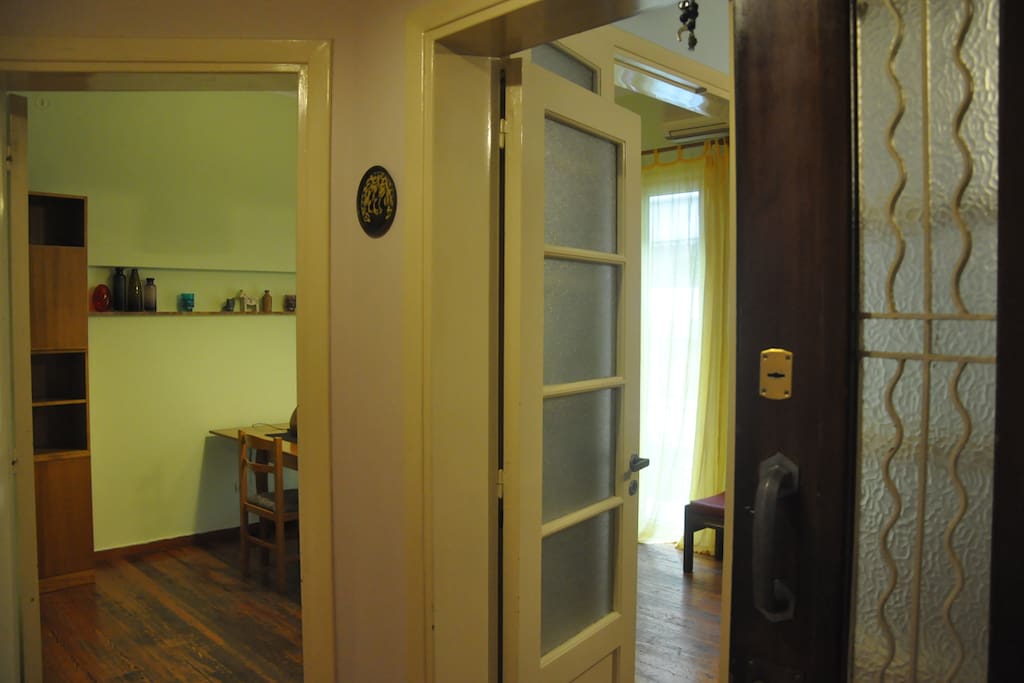
Bohemian modernist flat downtown

Zografou, Greece
Laid-back, colorful, modernist 60 sq.m. flat downtown. Feels as if you're staying at an absent friend's place. A variety of day- and night-life options accessible even on foot. Easy to commute, dir...
Showing posts with label Physical Preparation. Show all posts

Wednesday, 5 June 2013

Dynamo Concepts Training Videos: Biomechanical Training - Russian Stick Twirling

After the few Cossack dancing patterns we presented in this previous post in the Dynamo blog, it's time to take a look at another method of training biomechanics, i.e. quality of movement, in Russian Martial Art and namely, stick or saber twirling

Once again I would like to point out here that it is practically impossible to practice biomechanics and tactical skills in the same training drills. What you need to do is cultivate good quality of movement and the ability to generate power in non-tactical drills and then develop tactical awareness in another, totally different series of drills.

And herein lies the ingeniousness of folk-style Russian Martial Art: the biomechanics were taken care off through a series of training methods with a high social and entertainment factor! By learning to dance, young men practiced powerful pelvic and hip rotation, both components of tremendous importance in power generation. Then, by practicing stick or saber twirling, core stability, coordination and relaxation of the arms was developed, resulting in pure ballistic movement. This means that, when the time came for youngsters to study actual fighting methods, their body would not presents constraints in the learning process.

Enough with the talking: this is a short video presenting only a few stick twirling patterns that you could try out. Now, I only used baseball bats in the video, because I had just moved back to Greece from Sweden and my stuff was in boxes in a storage facility, so I could not find where my sticks were! This means that you should first try the exercises with something lighter, say a pair of sticks made of oak. 

How do you practice these drills? Well, make sure to have fun and don't go all OCD, counting reps, sets and rest intervals. You should literally fool around with the patterns and make sure that you can execute them slow and relaxed before you add speed and power, or else the momentum of the stick might rip apart your wrists or shoulders. Take it easy, and enjoy the process. You should expect a dramatic imporvement in your fist fighting skills after a few months of this type of training. PM me if you have any questions.


Train smart, train safe, be your own instructor,

Spyro

Tuesday, 23 April 2013

Dynamo Concepts Training Videos: Biomechanical Training - A Few Cossack Dancing Patterns

One of the most common problems in martial arts training arises when one is trying to mix up biomechanics of power generation with tactical skills acquisition in the same drill. In my almost thirty years in martial arts training I have witnessed more than a few times instructors trying to embed good biomechanical habits in their students (with comments such as "swivel those hips!" or "exhale sharp!") while they are sparring under live conditions. Well, let me - once again - be the bearer of bad news: training biomechanics and tactics in the same drill is impossible! If one has not learned to extend the back hip when punching, it is not a good time to learn it when he is being punched back!

Now, what I love about Russian Martial Art, or to be more precise, the folkstyle aspect of RMA, is the availability of numerous non-tactical drills that the practitioner can use to develop solid biomechanics of power generation, separately from the drills with tactical or technical content. I have only seen similar biomechanical drills in Chinese 'internal martial arts', and especially BaGua, but the difference here is that RMA drills are also fun to practice: for those of you who do not understand what I mean, I suggest you try some Russian stick or sword twirling or maybe some Cossack dancing patterns and then 'walk the circle' BaGua-style and tell me which is more enjoyable to practice.

In the two videos I'm posting today you will find a few Cossack dancing drills. The point of those is to teach the practitioner to coordinate pelvic rotation with hip rotation, in order to improve foortwork, punching power and kicking power. For most people in martial arts the expressions 'turn from the hip' and 'rotate the pelvis' are considered to describe one and the same movement (god knows why). Well, these are two separate movements that, if coordinated, can tremendously enhance your ability to express power.

I certainly hope these videos will be of value to you, make sure you let me know if you have any questions. In our next blog post we'll present a few stick twirling drills.


Train smart, train safe, be your own instructor,

Spyro 

Monday, 18 June 2012

On Breathing: An Interview with Dr Sergey Zinatulin, Part 4

This is the fourth and final part of the Dynamo blog interview with Dr Sergey Zinatulin on the subject of breathing. In the first part of the interview, Dr Zinatulin explained the ways our breathing can affect our health in general, in the second part he described a series of simple tests we can use in order to assess how well we are breathing, while in the third part he discussed matters related to breath training as treatment to diseases, the ways that our diet can affect our breathing. In this fourth installment he discusses the use of breath exercises in managing survival stress and enhancing sports performance.

Dr Sergey Zinatulin teaching the use of the Frolov Device to members of a special police unit in Novosibirsk

Dr Zinatulin, I happen to know that over the years you have consulted special units of the police in Russia on the use of breathing exercises to minimize the effects of survival stress. Is it long-term breath training you are advocating to law enforcements officers or specific techniques that should be used when one is under survival stress? 

I have a special interest in this subject since my son does his service in a special tactical assault group. I have also been invited to teach a number of seminars to various special units. In general, breathing techniques requiring the use of the Frolov Device that are being used by sportsmen can just as well be used to enhance fitness for special forces soldiers. I also teach basic methods of breathing without the device, which are extremely useful for relieving stress and the replenishing of vital resources while on the field. These techniques have been developed around Buteyko’s core ideas and my personal experience on the subject of breath-training. The main focus in my method is to perform slow diaphragmatic breathing using strict formulas of duration of inhalation, exhalation and holding the breath. 

Let’s move ahead to the relationship between breathing and athletic performance. First of all, are the breathing habits and patterns of an athlete necessarily healthy? Does physical training guarantee optimum breathing patterns for health?


Respiratory Illnesses in sportsmen are not rare. According to the available data, the rate of bronchial asthma in athletes is higher than in general population. It is actually assumed that nearly 20% of the athletes participating in the Beijing Olympic Games had symptoms of exercise-induced asthma (EIA).

There is no doubt that physical activity can increase the capacity of the respiratory system. A very interesting example is that of Australian potato farmer Cliff Young who, in 1983, at the age of 61, he won the first Westfield Sydney to Melbourne Ultra Marathon. Young was not a professional athlete but he spent most of his life running in heavy shoes in order to round up his sheep! But in order for one to achieve elite performance, special breath-training can be used to develop the reserve capacities of the respiratory system that can translate to significant improvement, especially in certain types of sports. This includes resistance training of the respiratory muscles both in inhalation and exhalation, increasing the vital capacity of the lungs, and developing resistance to hypoxia. Most often, what athletes do is improve their ability to hyperventilate during intense effort, but they rarely learn how to regulate their breathing in order to restore the body after the effort. In order to balance performance with overall health, athletes need to learn how to breathe optimally in a normal state so that they do not develop hyperventilation syndrome by transferring the breathing patterns they use when they're performing their sport to their everyday life.

What is the difference between training the breath with and without a device? Is there an advantage in using a device?

Training with various equipment and devices is widely accepted in sports circles – athletes lift weights or use exercise machines to increase muscle strength, endurance, coordination and movement speed. For athletes, it has been proven time and again that training with equipment is more effective than using bodyweight exercises exclusively. It is the same with breath-training:  training with a device allows us to create more complex and varied training programs at each stage of sportsman physical training (preparing for competition, competition, rehabilitation).    With the help of a device we can develop and regulate additional resistance during both inhalation and exhalation, perform breathing trainings in regimes of hypoxia (low CO2) or hypercapnia (high CO2). I personally advocate the use of the Frolov device, since it allows us to manipulate all the above parameters. In addition to that, it offers added benefits such as the vibratory stimulation of the respiratory muscles and bronchi, while it can also be used for performing inhalations with essential oils.

Finally, I often like to point out another two important factors regarding breath-training that are not talked about much: breathing exercises improve adaptation to changes in climate and time zones which is important for sportsmen who compete internationally, plus breathing exercises with a device help athletes recover after injuries and surgeries faster and easier.

Can breath-training enhance athletic performance in measurable ways? For example, is there solid research indicating that training the breath can improve aerobic power or capacity or maximal oxygen uptake (VO2 max)? I know for sure some of this blog’s readers would be most grateful if you could point them to that research.

There are numerous studies about it in the sports medicine literature and this link is just one of those studies: http://www.intellectbreathing.com/files/sport-device_eng.pdf.

Is there currently any particularly promising research conducted on the effects of breath-training on our health? If it depended entirely upon you, which area would you chose to conduct research in?

Nowadays, laboratories always have some research going on around breathing and its potential to affect health. This is closely connected with the need to qualify specialists that work in special conditions (lifeguards, divers, spacemen), and quite important for the development of non-pharmacological treatments and prevention of various diseases and the improvement of the quality of life for the elderly and patients with Parkinson’s, Altzheimer’s and other diseases. Rich Stacel (a natural health practitioner, and practitioner of Chinese martial arts) summed up this situation very successfully when he said that ”...science has only recently begun to open up to the idea that breathing might have more going on with it than the simple exchange of gases with each breath. Scientists are now coming to see that breathing also acts as a metabolic regulator, has immune boosting potential, increases oxygen flow to the brain and a lot more”.

In my opinion, the most exciting part of this research is breathing and brain function. Our breath is a link between body and mind. The brain weighs only 2% from the body mass, but consumes 20% of oxygen coming into the body, and that is exactly why the quality of breathing directly influences the condition and function of the brain. At average, a single man takes 14 breaths per minute, a trained one 8, and one that is meditating only 6. This type of breathing is considered by scientists as deep and efficient. American scientist R. Wallis has found out that during meditation the body starts to work more efficiently, consuming 16% less oxygen, only 8% less than during sleep! Breathing exercises improve not only our emotional state, but the intellect, attention, long-term and short-term memory as well. If we think about it, these benefits are of the utmost importance for our civilization, because the progress is dependent upon the products of our intellect. Prevention of stress-related and psychosomatic diseases is also highly important. My professional experience shows that breath-training improves patients’ state even in the most severe of cases like head injury after-effects, multiple sclerosis, depression, and stroke. From a social point of view, an important field of the breathing-related research should be obstetrics, because the health of a baby – the future of our society, that is - fully depends on the quality of the mother’s breathing. I sincerely hope that medical science will soon begin extensive research on this remarkable resource and we will get to witness the health revolution of  humanity!


This fourth installment concluded the Dynamo blog interview with Dr Sergey Zinatulin. I would like to thank him for offering valuable insight into this subject which is often the source of misunderstanding in martial arts circles. I would also like to thank Anna Chistyakova for translating back and forth between myself and the good doctor, as well as my student Charles Franz, Thong Guyen, Pete Jensen and Joao Furia for sending over their questions. 

For more information on Dr Zinatulin's work and the Frolov Respiration Training Device, please visit:
www.intellectbreathing.com 

www.vitaltkoncept.se 

Tuesday, 15 May 2012

On Breathing: An Interview with Dr Sergey Zinatulin, Part 3

This is the third part of the Dynamo blog interview with Dr Sergey Zinatulin on the subject of breathing and breath-training. In the first part of the interview, Dr Zinatulin explained the ways our breathing can affect our health in general, while in the second part, he described a series of simple tests we can use in order to assess how well we are breathing. In this installment he discusses matters related to breath training as treatment to diseases, the ways that our diet can affect our breathing and offers his opinion on some breath-training methods used in psychotherapy and sports.

Dr Sergey Zinatulin teaching the use of the Frolov Respiratory Training Device
to members of the Russian army special forces
Dr Zinatulin, in cancer related research, it is often claimed that hypoxic cells are more aggressive and resistant to chemotherapy and radiotherapy. Do you believe that breath training can affect the oxygenation of cells and thus be relevant in cancer treatment?

When we talk about cancer treatment, we are usually referring to special methods such as surgery, chemotherapy, etc. However, we should remember that the success of cancer treatment depends not only on the treatment done, but also on the overall state of the patient’s health. Further rehabilitation of the patient is very important, since surgery does not equal recovery. While a lot is said about the importance of a proper diet on the overall health, almost nothing is mentioned on the role of breathing exercises in treatment and rehabilitation of cancer patients.

Breathing exercises are a valuable tool for the successful rehabilitation of oncological patients, as part of a health-improving physical training program. Experience from oncological patients treatment shows that they need rehabilitation even after successful surgery. These people are in a state of stress, their physiological reserves are reduced, and their immunity is weakened. Properly chosen breathing exercises, combined with the oncologists’ recommendations, help restore the nervous and immune systems to their normal state and provide for effective prevention of recurrence.

My personal experience in working with cancer patients is not extensive, but my observations are the same as those of the specialists in the field. For example, Johnny Suskevitch, consultant of the Duke University Medical Center in North Carolina, has taught breathing exercises to most of his patients since 1999 and about half of them suffer from cancer. Japanese professor Muraki Hirosama who studied different breathing methods says: “…few people know that great results can be achieved just by breathing properly. The most impressive effect of correct stomach-breathing is an increased ability of the body to heal itself. Many diseases such as cancer, diabetes, hypertension, liver and stomach conditions are treated better if the patient combines treatment with breathing exercises. Moreover, medications intake decreases greatly”. Finally, my colleague doctor S. N. Paschenko reports good results on using the Buteyko method in women with breast cancer: special treatment led to increased three-year survival rate, better quality of life, including reduced fear of unfavorable outcomes of the treatment, increased work capacity, easier social adaptation and relief of edema in upper extremities.


How about the relationship of nutrition with breathing? For example, we know there are foods that can trigger allergic reactions and also some other, dairy products for example, that increase the production of mucus. What would an ‘optimum breathing diet’ be like? What should we avoid?

This topic seems to be of great interest to many people, because quality of nutrition is considered to be the main factor for health and longevity. But it is almost impossible to give specific universal nutrition guidelines, due to the fact that breathing exercises are performed by different people, with different needs, living under different conditions and circumstances, from children to seniors, from sedentary patients to professional athletes.

Various foods have different pH indexes and thus can indirectly influence the activity of the breathing center, the pH balance in blood and tissues, lung ventilation and breathing processes in tissues. K.P. Buteyko has pointed out some factors that can cause overbreathing, and those are: overeating of high-protein foods (fish, eggs, pork, fatty cheese, black caviar, or lots of vegetable protein) and consuming strong tea, coffee, cacao, chocolate and alcohol in large quantities. Also according to Buteyko, vegetarianism and intermittent fasting make your breathing lighter. 


My experience shows that when people perform respiratory training consistently, they need less food. On the whole, there is only one basic one recommendation on nutrition I can give to people who practice respiratory training: keep your diet diverse and consume everything in moderate quantities - avoid overeating and avoid eating the same foods all the time. Deep-fried and smoked foods, sweets and sugar, white flour products, alcohol and coffee should be kept to a minimum. It is also important to switch to a vegetarian diet from time to time and occasionally do short periods of fasting with fruit juices or just water. Finally, keep a log of what you eat to determine which foods are best for you.  

In cases of respiratory diseases, such as asthma, is seems quite obvious that breath training can offer great benefits. But, what if the patient is at a very young age? I know that the main focus of your practice is treatment and health improvement in children, so in your expert opinion, how easily can we teach breathing exercises to a five year old, for example? Do you have any specific suggestions for such cases?

Indeed, respiratory exercises are mandatory in cases of lung diseases (asthma, COPD, cystic fibrosis, after pneumonia or lung surgery) and just as important in cases of children suffering from lung diseases. It is fairly easy to teach breath-training to school children, because they understand those exercises better, but I have also worked with pre-school children of age 3 to 5. In such cases, I have found that the most effective approach is to introduce the simplest exercise – slow diaphragmatic breathing through the nose – in the form of play. It is most important for a child to breathe with the diaphragm. You can also teach a child to exhale slowly by having her make bubbles with a straw in a glass of water. It is more complicated to teach a child how to use a respiratory training device, such as the Frolov device, but these basic exercises we mentioned can be quite effective. It is also important to teach a child to breathe only through the nose during the whole day.


Let’s talk a little about the connection between breathing and our psychological state: we know that psychological stress can alter our breathing patterns. How does this happen? Can it work the other way around, and by this I mean, can we alter our breathing patterns to minimize the effects of psychological stress on our body?

Breathing, brain function and the nervous system are closely connected. Psychiatrists, psychotherapists and physiologists know that all emotions (happiness and sorrow, anxiety and depression, fear and calmness, strain and relaxation) have a direct and immediate influence on the breathing function. To simplify things, think of it this way: when we are crying or laughing, the rhythm of our breathing is offset, we are ‘missing a beat’. It is mainly stress that throws the system that regulates breathing off balance and in turn deregulates the function of organs (heart, intestine, etc.) and systems (endocrine, immune). In this sense, it is of great importance that we perform respiratory training regularly, so that we can prevent possible ‘breakdowns’. After periods of great stress, I suggest daily breath-training sessions combined with relaxation for 7-10 days in order for one to recover mentally and physically. 

There are some methods of self-exploration and therapy (for example, Stanislav Grof’s Holotropic Breathing), advocating the use of hyperventilation in order to achieve non-ordinary states of consciousness for the purpose of self-exploration. Such methods claim to be successful in treating psychological problems, but what do you think about possible side-effects in the physical health? Are there cases where consciously practicing hyperventilation can actually be good for us?

It’s true that the experience from using Grof’s method shows how deeply and strongly one can influence the mind through breathing. I personally view this and other similar techniques as ways of affecting consciousness by way of breathing, but not as breath-training, and that is why such methods should only be performed under the supervision of a specialist, as opposed to respiratory training, which we can practice without supervision. A Holotropic Breathing session can take up to 2 or 3 hours depending on the level of participants. A much less extreme alternative that I suggest, in order to effectively relieve stress or anxiety, is to lie on your back, inhale slowly for about 10 seconds, exhale in a relaxed manner for 10-15 seconds, and repeat for 5-10 minutes. 

How about practicing breath holding? I believe there is a specific practice in a Russian martial art system where practitioners hold their breath while performing physical exercise (for example, push-ups) in order to gradually induce a feeling similar to that of panic and then recover by breathing fast and sharply. Is it possible to build ‘mental toughness’ through breathing practices such as this one? How about the effects such practices might have on our health?

Yuri Bulanov, doctor of sports medicine, who has been working a lot with strength training and bodybuilding, has developed his own patented system of breathing training, which is based on breath holding. He calls it hypoxic breathing training, since when you are holding your breath, the amount of carbon dioxide in the blood is increased and the oxygen saturation is decreased.  Bulanov thinks that breath holding in a calm state has a strong effect on the body, but he adds that it should be practiced with great caution. 


Breath holding is an extreme type of training that places significant stress on the body. It can be used as a method of physical training for different sports, but it is extensively used in free diving. If you are interested in that, you can find detailed descriptions of specific methods in the book «Breatheology» by Stig Avall Severinsen, a four time World Champion freediver. Nevertheless, it is my opinion that the experience of both sports medicine and martial arts tells us that it’s more important to be aware of your breathing and learn how to control it during physical activity, rather than to be able to hold it for long periods of time.


This third part concludes the Dynamo blog interview with Dr Sergey ZinatulinFor more information on Dr Zinatulin's work and the Frolov Respiratory Training Device, please visit:
www.intellectbreathing.com 
www.vitaltkoncept.se 


Tuesday, 10 April 2012

On Breathing, Part 2: Find out how well you are breathing

This is the second part of the Dynamo blog interview with Dr Sergey Zinatulin on the subject of breathing and breath-training. In the first part of the interview, Dr Zinatulin explained the ways our breathing can affect our health in general. In this installment he describes a series of simple tests we can use in order to assess how well we are breathing and provide a reference point to determine the effectiveness of our breath training. 


Dr Sergey Zinatulin teaching his 'ABCs of breathing' program 
to the students of a school in Novosibirsk, Russia.


Dr Zinatulin, is there a simple way or a test we can easily perform to find out how well we are breathing?


We can assess our breathing at home by using a number of simple tests. Your readers can go ahead and try any of the following tests or all of them.  


First we can determine our type of breathing, which can be thoracic, mixed or diaphragmatic.  Sit comfortably, preferably with you back and neck supported, and note what happens to your torso when breathing in. In thoracic breathing, the chest goes upwards and ribs expand, during the inhalation. In mixed breathing, both the chest and the frontal abdominal expand while breathing in. In abdominal, or diaphragmatic, breathing, the frontal abdominal wall comes forward and the stomach swells, still the chest does not expand during the inhalation. As we mentioned earlier, when in a calm state, only diaphragmatic breathing is recommended. In healthy persons, diaphragm expansion during the inhalation act is 6-8 cm, while in physically trained people it can be up to 10 cm. 


The second assessment test you can perform is to determine the frequency of your breathing. Count the number of breathing cycles you perform in a minute in a state of rest. One breathing cycle consists of one inhalation and one exhalation. If you count 15 breathing motions and one inhalation, this would be 15.5 motions per minute. According to the Buteyko Table of Health zones, a healthy person should be performing somewhere around 8 breathing cycles per minute.


Another thing you can check is your breathing rhythm. Healthy people usually have a very rhythmical breathing in a calm state, but each with their own special characteristics. All you have to do is pay attention to your breathing, and follow the peaks and valleys of each cycle from inhalation to exhalation, paying attention to the points at which one phase changes into the other. Also note whether or not you make pauses during the two phases and if yes, before which part of breathing cycle.

These three parameters (type, frequency and rhythm) are what we could call ‘external characteristics’ of breathing, they give us a basic idea about its external, visible aspects. But breathing, just like an iceberg, has an invisible and actually more important part – it is the part of breathing that is happening inside the body, in our cells. This determines the quality of our breathing and state of our health.

There are three tests that are commonly used to evaluate the quality of our breathing. The first one is known as the Control Pause test, in which you measure the amount of time you can comfortably hold your breath after a calm exhalation. This is a rather sensitive test: you shut your nostrils with your fingers after you calmly exhale and then you hold until you feel the very first signs of air shortage. You should not hold your breath until you feel discomfort! At the end of the test you should be able to resume your breathing exactly like before, without taking a deep breath – if you do, it means that you held your breath longer than the test requires, so the measurement you will get will be inaccurate. Do not be surprised if your control pause is very short. Even athletes rarely do better than 30-40 seconds. According to KP Buteiko, the control pause for healthy adults is somewhere around 60 seconds. If a person has CP of 60 seconds, this person is considered to have a normal CO2 content.

The second test is known as Stange’s Test or breath-holding at the stage of a calm inhalation. Breathe in and out normally, then take another inhalation at about 80% of your maximum capacity and then hold your breath. Once again, do not hold your breath until you feel extreme discomfort. A good result for this test, indicating good health, would be 75±5,5 seconds for men, and 54±5,2 seconds for women.

The third test you can perform is Hench’s Test, or breath-holding at the stage of a calm exhalation. This is similar to the Control Pause test, but the difference is that, after a calm exhalation, you want to hold your breath for as long as you can, without of course going to extreme levels of discomfort. In general, a good result for this test would be 46,0±3,3 seconds for men,  and 32±4,0 seconds for women.

These tests show how tolerant our body is to hypercapnia (high level of CO2) and hypoxia (low level of O2). If a person suffers from disease, these parameters decrease. On the other side, through regular breath-training, these parameters can increase by 10-20 seconds, and that is why I believe that breathing exercises are essential to maintain excellent health. 

In the third part of this interview Dr Zinatulin will address the effect of breathing on brain performance and the immune function of our body and he will also discuss the possible benefits of breath training in cases of serious diseases, such as cancer.

For more information on Dr Zinatulin's work and the Frolov Respiration Training Device, please visit:
www.intellectbreathing.com 
www.vitaltkoncept.se 

Wednesday, 4 April 2012

On Breathing: an Interview with Dr Sergey Zinatulin - Part 1

Today, I am really happy to post the first part of my interview with Dr Sergey Nakifovich Zinatulin, on the subjects of breathing and breath-training. Now, judging from the variety of breathing-related suggestions, aphorisms, truisms, and 'facts' that I have heard over the past 25 years that I have been into martial arts, my conclusion is that, although the importance of breathing is almost universally accepted in circles of martial artists, its function is barely understood. In this sense, I thought Dr Zinatulin might be able to offer valuable insight, so it was about two months ago that I announced that this interview would happen and asked the readers of this blog to send me the questions they would like to ask the doctor. I have to admit though that what I originally conceived as an interview, ended up being closer to a small scientific textbook. I hope the contents are as insightful to you as they have been to me. A great big thanks to my friends who contributed their questions for this interview!

Dr Zinatulin, could you please introduce yourself to the readers of this blog, and could you provide some information about your background?
 
I was born in 1959. In 1982 I graduated from medical University of Arkhangelsk, Russia with a major in therapy and specialization in psychiatry, neurology and narcology.  I worked in this field for about 4 years, and then in 1987-1988 I took courses in the Buteyko Breathing Technique under Konstantin Buteyko himself. 

From 1997 on, I have been studying and researching the use of different breathing training devices, respiratory kinesiotherapy, and developed various methods of respiratory training both with and without special devices. My main focus is treatment and health improvement in children: I’ve been worked in a clinic for children, created a special program to teach the Buteyko method to children and have overseen its application in kindergartens and primary schools. I have authored several books on respiratory training and I have lectured extensively on the subject.For the results of my work in the field of healthcare and clinical rehabilitation, I was awarded the A.P. Chizhevsky gold medal “For Professionalism and Business Reputation” by the Russian Academy of Medical and Technical Science.

I’m currently working as the head of the scientific department of the Russian company Dinamika; I am offering consultations to patients from all over the world on the use of the Frolov device. From February 2012 I also started giving classes of my program for children “ABC of Breathing” in one of the best schools in Novosibirsk. 

Who or what was it that prompted you to devote your life and career to the study and research of breath training, respiratory therapy of various diseases, and the use of breathing devices?

 
During the period I was studying under Konstantin Buteyko, I became convinced of the health benefits that we can reap from breath-training - I completely restored my nose breathing and managed to cure myself of my stomach ulcers, gastritis and cholecystitis. My personal experience and numerous successful cases of other Buteyko practitioners lead me to the decision to further develop these ideas scientifically and in practice. Down the road, I got to understand that learning the Buteyko method can be quite difficult, and that is why I became interested in breath-training devices that help learn correct breathing in a much simpler way. 


From 1987 until today I have witnessed many cases of patients that recovered ‘miraculously’ thanks to the benefits of breath-training, with help from our specialized knowledge, after putting in a lot of effort themselves, of course.

Everybody seems to know (or claims to know) that “Breathing is Living”. Would you like to explain in the simplest way possible why this is true, and perhaps provide an analogy so that we better understand the role breathing plays in our body?

 
I have developed a special program where children from the age of 5 years old get to learn about the benefits of controlled breathing.  I use a very simple test to help them understand how important breathing is and you can try it too with your children: put some food and a glass of water on a table. Have them sit by the table, then hold their breath and wait to see what is the first thing they desire; air, water of food? It is air, of course!


Medical research shows us that a human being is a single whole. It is a proven fact that breathing is part and parcel of blood circulation, metabolism, energy exchange, acid-alkaline balance, and water-salt metabolism. The interconnection of breathing with sleep, memory, emotional tone, ability to work, physiological and adaptive capacity, etc. is also widely known. Between all those, we exist due to the energy of breathing. At my lectures and workshops, I often call breathing “an invisible thread of life” - if it is cut, we die.

Each and every one of us breathes, but is there a correct or an incorrect way to breathe? How could we define ‘correct breathing’ and what are its benefits?

 
The first rule of correct breathing entails nasal breathing (both during inhalation and exhalation) at rest and during light physical activity. When we are speaking, singing, or we are engaged in a moderate physical activity, we should inhale through the nose and exhale through the mouth.


Second rule: diaphragmatic breathing is the only normal type of breathing in a state of rest. During rest or light physical activity (quiet walking, slow race, speaking, singing), we must learn to breathe diaphragmatically, expanding the stomach during the inhalation. During intense physical activity, if necessary, diaphragmatic breathing can be augmented through work performed by the auxiliary respiratory muscles (intercostals and thoracic). Once intense physical activity is completed we should once again return to diaphragmatic breathing.


Correct breathing improves lung ventilation and prevents hyperventilation. It has a positive effect on the circulation of blood and lymph, our metabolism, the function of intestinal organs and our nervous system.

How does our breathing become disturbed in the first place? How do we ‘learn’ to breathe wrong?

 
Generally, the brain respiratory center controls the whole process of breathing. The neurons of the respiratory center receive information about the composition of inhaled air (temperature, humidity and various impurities), gaseous composition of air mixture in the alveoli of the lungs, gaseous composition of the blood, the lungs ventilation parameters (inspiratory and expiratory volume, respiration rate and frequency), pulmonic tissue stretching, ventilation apparatus performance, and respiratory muscles tension. The respiratory center receives this information non-stop; it analyzes, processes, and compares it with data on body temperature, metabolism, acid-alkaline balance, pulse and blood pressure indexes, etc. Therefore our breathing reacts to pretty much all the processes happening inside our body and in the environment. K.P. Buteyko, for example, pointed out that overeating (especially too much protein), allergens, hypodynamia, sleeping on one’s back, stress, smoking, and alcohol consumption have a bad influence on our breathing. 
I personally think that the main reason of disturbed breathing in people today is the lack of a “breathing culture”. Now that I am working with school children I see proof of it all the time: children at the age of 7-8 know about food supplements and vitamins, but know nothing about controlled breathing and correct posture. Gay Hendriks has made a similar observation in his book, Conscious Breathing; he writes that he has rarely seen newborns who couldn’t breathe using their diaphragm, but among 6-graders it was almost impossible to find one who could. 


If we fail to understand the way to breathe properly, all other factors lead to dysfunctional breathing, chronic hyperventilation and other disorders. And this, in turn, leads to development of different diseases (lung, heart, vessels, metabolism, and nervous system pathologies). 

How about oxygen and carbon dioxide? Could you explain how each one affects the acid-alkaline balance in our body in the process of breathing, and subsequently how does each of them affect our health?

 
Through the process of breathing, oxygen is brought to the lungs, where it gets absorbed into the bloodstream and then delivered to all the body’s tissues for the important energy-creating function of metabolism. The part of the breathing process that takes place on the cellular level is the oxidation of food molecules that releases energy and has carbon dioxide and water molecules as by-products. In our cells, breathing and nutrition come together in metabolism, which is a constant process of substances and energy exchange.
Regarding oxygen, our body uses approximately 600 liters per day, in a calm state.  About 90% of that oxygen is used in the cells for oxidation of nutrients, to provide energy for the various functions of the organism. The thing is that part of this oxygen creates active forms of oxygen with high oxidation activity. These are known as free radicals.  These are are very active chemical substances that circulate in the body and are ready to react with other molecules of vital importance to the living cell. If oxidation stress develops in the body, it may be the cause for a number of serious diseases, including heart disease, cancer, cataract, atherosclerosis, and many others. The contradiction here is that a certain amount of free radicals is actually necessary – for example, our immune cells use free radicals to kill bacteria. In this sense, it is important to maintain balance between the role of oxygen as oxidant of nutrients, required to produce utilizable energy, and the damaging role of oxygen as oxidant of DNA molecules and cell membranes. Interestingly, this balance can be maintained with the help of carbon dioxide that is a universal inhibitor of active oxygen forms generation in cells: it noticeably slows down the reactions where active oxygen forms are generated. Thus, it protects our cells from destruction.


Carbon dioxide develops in our cells as a result of chemical reactions. For a long time it was assumed that it is a waste product of cellular respiration and must be removed from the body. That is why it was considered important to breathe a lot and deeply to get more of the “good” oxygen and remove more of the “bad” carbon dioxide. Nowadays, after long-term research, it has been established how significant the biological role of carbon dioxide is. It is now common knowledge that carbon dioxide plays an active part in the regulation of breath, blood circulation, metabolism, acid-base balance, electrolytic balance, permeability of cell membranes, nerve cells excitability, bronchial motor tone, and the tone of blood vessels, digestive organs, and urinary tracts. Through specific breath-training practices we can ‘harness’ the healing properties of carbon dioxide and use them to prevent a great number of diseases or assist in their treatment.

In the second part of this interview, Dr Zinatulin will present a number of simple tests we can use to assess how well we are breathing.

Wednesday, 22 February 2012

Dynamo Kettlebells Concepts: Martial Arts Training... with Kettlebells!

“DYNAMO KETTLEBELLS CONCEPTS”? WHAT’S THAT?
It is a form of specialized strength training that you can use to make your martial arts/combat sports-specific movements more powerful.


HOW DOES IT DIFFER FROM ‘CONVENTIONAL’ KETTLEBELLS TRAINING?
The most popular forms of kettlebells training out there offer what is known as General Physical Preparation (GPP), i.e. they increase the body’s capacity for work (especially strength endurance) regardless of the specific activity one wants to become better at. Other methods of training for GPP are running, rope skipping, weight-lifting, calisthenics, etc.

If you think of your body as a car, GPP methods mostly increase the horsepower of the engine and the size of your tank. On the other side, specialized strength training methods, such as the Dynamo Kettlebells Concepts, improve the way your car can apply the power on the road – we could say that they improve the grip of the tires, handling and cornering, the mechanics of the car, but also the skills of the driver!

In a few words: GPP improves your strength, your power and your endurance, but can also address possible muscular imbalances in your body (lack of mobility, stability, etc). The Dynamo Kettlebells Concepts use those improved motor abilities and apply them in specific key-movements of martial arts and combat sports, so that you can become better at them.

CAN THE DYNAMO KETTLEBELLS CONCEPTS REPLACE GENERAL PHYSICAL PREPARATION?
No, they can NOT. The Dynamo exercises and drills should be used in combination with other training methods of physical preparation in the context of a periodized program. In order to put the Dynamo Kettlebells Concepts to good use, you need to have worked on your GPP before.

If you already have a conditioning coach who is helping you with GPP, that is great - the Dynamo Kettlebells Concepts will be an excellent addition to your training. If you don't have one, and you wish to improve your GPP, the Dynamo Strength and Conditioning Concepts will bring you where you need to be physically.

WHAT ARE THE BENEFITS OF PRACTICING/TRAINING AT THE DYNAMO KETTLEBELLS CONCEPTS?
A dramatic increase in punching power is the most obvious benefit, but also your footwork, evasion and head movement, rhythm, timing, flow and efficiency of movement (more work done with less effort) will be significantly improved.

For more information on the Dynamo Kettlebells Concepts, contact info@dynamoclub.se.

Wednesday, 18 January 2012

Slow push-ups: do you really need them?

Strange creatures, those humans – it’s not only efficiency they’re after, it’s oversimplification too. Let me give you a training related example: people are not just content with getting the best possible results with the least possible effort (which makes sense, if you ask me), they also want to practice as few things as possible! The dominant mentality could be described as such: “Can you find me one single exercise that builds muscle and strength, burns fat and gives me the heart of a Marathon runner?” This is what people want and the almighty market rushes to provide it with every possible opportunity. Thus, every now and then, we end up not just with the 'perfect training program' but also with exercises being attributed with miraculous properties. The kettlebell swing has been named ‘a fountain of youth’, for example, while the Turkish Get-up is supposedly all you need in order to build stability, mobility AND strength around the pelvic and shoulder girdles. And then, there’s the slow push-up, the slow flat-foot squat and the slow sit-up, which according to a specific brand or Russian Martial Art activity, are the only resistance exercises one needs to practice in order to build the attributes needed for combat training.

It is my belief that physical preparation training is not prescribing and performing a (long or short) series of exercises, but the fine-tuning of a series of parameters through various training protocols, in order to perform the specific movements of a particular activity, more effectively and efficiently. In this sense, there are no good exercises or bad exercises and there are definitely no perfect exercises or ‘all-you-need exercises’. Exercises and training protocols can only be consistent or non-consistent with your training goals, depending upon the results they produce. So as to give you an example, let’s put the slow push-up under the microscope. 

WHAT ARE SLOW PUSH-UPS GOOD FOR?
Any type of push-up can build local muscular endurance of the arm extensors and chest muscles. Push-ups can also promote stability at the hips, the torso and the shoulder girdle – as long as they’re performed with proper form. If your belly is sagging or your butt is sticking up, if your shoulder blades are popping away from your ribcage (winging), if your head is dangling towards the floor, then your form is not proper, and you might be doing more harm than good, both to your posture and your joints, so keep those points in mind (and no, bad form does not ‘promote relaxation’). But what are the benefits of performing push-ups slowly?  Well, performing one repetition of an exercise that lasts one minute is a rather uncommon training protocol that I have never come upon during my years of training or in any of my training books (and I have quite a few). With the amount of unconventional (bordering on exotic) resistance training methods explored by the Soviets during the 70’s and 80’s, if there was remarkable value in this one, we would definitely know a lot more about how it works, but it is not so. What we can do then, is make a few educated guesses based on similarities with other training methods whose effects we know more about. So, let’s give it a try: 

SLOW PUSH-UPS INCREASE CONNECTIVE TISSUE STRENGTH/TENDON STIFFNESS
According to Verkhoshansky, “long application of isometric exercises leads to significant expansion of the connective tissue” [1]. ‘Isometric’ is a contraction of the muscles that is not accompanied by changes in muscle length – when you push against an immovable object, a wall for example, your muscles are contracting isometrically. Connective tissue in our case is tendons and ligaments, most probably tendons only, since normal everyday activity (without training) appears to be sufficient to maintain 80–90% of ligaments’ mechanical potential [2]. Remember here that tendons connect muscles to bones, while ligaments connect bones to bones (in joints). Research also indicates that long duration (more than 20 sec) isometric exercises lead to decrease of the elasticity of tendons, i.e. tendon stiffness [3]. One more thing we often find in strength training literature is that moderate repetition sets (8-12) are optimal for building connective tissue strength – in case you haven’t had the chance to use a timer while training, it is interesting to know here that 8-12 repetitions of an exercise performed in moderate pace last somewhere between 30 and 35 seconds. What is most likely then is that the accumulated time under tension rather than the way of performing muscle contraction (statically or with movement) is responsible for the increased strength and stiffness of the connective tissues: whether you’re moving or not, if you maintain constant tension for 20-30 seconds in a group of muscles, your tendons become stiffer. It would make sense then to assume that a push-up performed slowly will make the tendons of the muscles around the shoulder and elbow joints stiffer, i.e. harder to elongate. 

(SOME) SLOW PUSH-UPS INCREASE LOCAL MUSCULAR ENDURANCE
A variation of the slow push-up often proposed by RMA instructors involves repetitions performed slowly in a limited range of motion, mostly around what is known as the ‘sticking point’ of the exercise, where the effort becomes increased to the mechanical disadvantage of that particular position. This partial reps protocol has been used extensively by the bodybuilding community and is supposed to facilitate hypertrophy of the slow-twitch muscle fibers, by impairing the blood circulation to the slow fibers through the constant tension [4].  Increasing the size of your slow twitch muscle fibers can also translate to better oxygen utilization by them, thus improved local muscular endurance. 

SLOW PUSH-UPS CAN FUNCTION AS A MENTAL TOUGHNESS EXERCISE
Constant muscular tension is associated with a feeling of discomfort, so performing resistance exercises slowly can be used as a means of desensitizing one to the feeling of fatigue – a meditation on pain, if you like. Various methods of removing the focus from the feeling of discomfort can be used, the most common being that of focusing on the breath and regulating it. 

WHAT ARE SLOW PUSH-UPS NOT GOOD FOR?
In a few words, slow push-ups will not improve your maximum strength, i.e. the ability of your nervous system to recruit a lot of muscle fibers at the same time, in order to produce more force. They will also not improve your power, which is the ability of your muscles to produce work (movement) in a short amount of time. They will not improve your skill either, since push-ups are a rather simple movement pattern.
One more useful note here is that like any other training method, slow push-ups are subject to the law of diminishing returns: the longer you perform them over time, the less the effect becomes, since your organism becomes desensitized to them and does not adapt any further.
Finally keep in mind that if you only perform horizontal pushing movements (such as the push-up), without any horizontal pulling exercises, you might end up with muscular imbalances in your shoulders and subsequent chronic injuries.


At the beginning seconds of this nideo,  Mikhail Grudev of the IZVOR system is practicing strikes on the heavy bag. His explosive movements, performed in increased ranges of motion would be better served by compliant rather than stiff tendons. Training in slow push-ups for extended periods of time is not helpful for this type of movement.

WHY USE SLOW PUSH-UPS, THEN?
Use them by all means at the beginning stages of your training, especially if you do not have much strength training experience – connective tissue strength is most necessary in athletic activities, such as martial arts training. You could also use slow push-ups as part of your ‘anatomical adaptation’ training periods each year, before you start using training protocols for strength and power. Regarding tendon stiffness: first and foremost, do not confuse it with joint stiffness, i.e. the inability of a joint to move through its full range of motion. Tendon stiffness, leads to an increased stiffness of the muscle-tendon complex, which basically means that your muscles become like hard rubber bands: they stretch little and they spring back fast. This is useful if your set of skills requires you to generate power in short ranges of motion. On the other side, increased tendon stiffness is NOT desirable if you need to generate a lot of power in increased ranges of motion: a tennis serve, for example does not benefit from increased tendon stiffness. One last thing on this matter, which is a bit complex: you can do with very little stiffness training altogether, if you replace the tendon stiffness with some voluntary muscular contraction that pre-stretches your tendons, thus making them momentarily stiffer (this is known as ‘active stiffness’). To understand this better, try skipping rope with your ankles in dorsiflexion (the opposite movement of pointing your toes, that is) and your calves isometrically contracted. You will see that you will be bouncing effortlessly, because your Achilles tendon will be acting as a spring, pre-stretched, thus momentarily stiffer, not structurally harder! Of course, this ‘situational tendon stiffness’ is a skill, not an attribute, so you need to practice it – it’s your choice, do what you deem appropriate. Regarding local muscular endurance: I would rather use other training methods that have the ‘stamp of approval’ of sports science, and have been used extensively by athletes over the years. Regarding mental toughness: yes, a one minute repetition of a push-up is very tough, but so is a ten-minute set of kettlebell snatches, or stationary cycling for five minutes with the resistance set to maximum. Mixing your methods might lead to better results.

MY PERSONAL EXPERIENCE

During the years I was practicing a specific brand of Russian Martial Art activity (Systema-RMA), I practiced slow bodyweight resistance exercises (push-ups, sit-ups, flat-foot squats) almost exclusively for a prolonged period of time (about two years). During that period I developed chronic pain in my right shoulder that was later diagnosed as supraspinatus tendinosis. The pain gradually subsided as I added pulling exercises to my training program, pull-ups, chin-ups and horizontal rows. I personally did not see any significant increase of my punching power or punching skill (as is often promised by Systema-RMA instructors), as would be expected, since slow push-ups are neither a power nor a skill exercise. On the contrary, I experienced a dramatic increase in my punching power when I started practicing ballistic movements with kettlebells.

CONCLUSION
The purpose of this blog post was not to use fancy terms such as ‘isometric contraction’ or ‘tendon stiffness’, but rather to point out that there are no exercises that can ‘cover all your needs’, with miraculous properties, that can function as magic pills. Before you incorporate any exercise in your training, you need to know as much as possible about its benefits and drawbacks (the adaptations it brings about on your body) and how these can help you reach to your specified performance goals. This way you will train, rather than just ‘work out’.

References
[1] Verkhoshansky Y., Special Strength Training Manual for Coaches. Verkhoshansky SSTM, 2011. p. 83
[2] Zernicke R. F. & Loitz-Ramage B., Exercise-Related Adaptations in Connective Tissue, from Komi P. V., Strength And Power In Sport. Blackwell Science, 2003. p.107
[3] Kubo K., Kanehisa H., Fukunaga T., Effects of different duration isometric contractions on tendon elasticity in human quadriceps muscles. The Journal of Physiology (http://jp.physoc.org/content/536/2/649.full), retrieved January 2012
[4] Seluyanov V.N., Erkomayshvili I.V., Adaptation of skeletal muscles and the Theory of Physical Preparation, from Verkhoshansky Y., Special Strength Training Manual for Coaches. Verkhoshansky SSTM, 2011. p. 85